
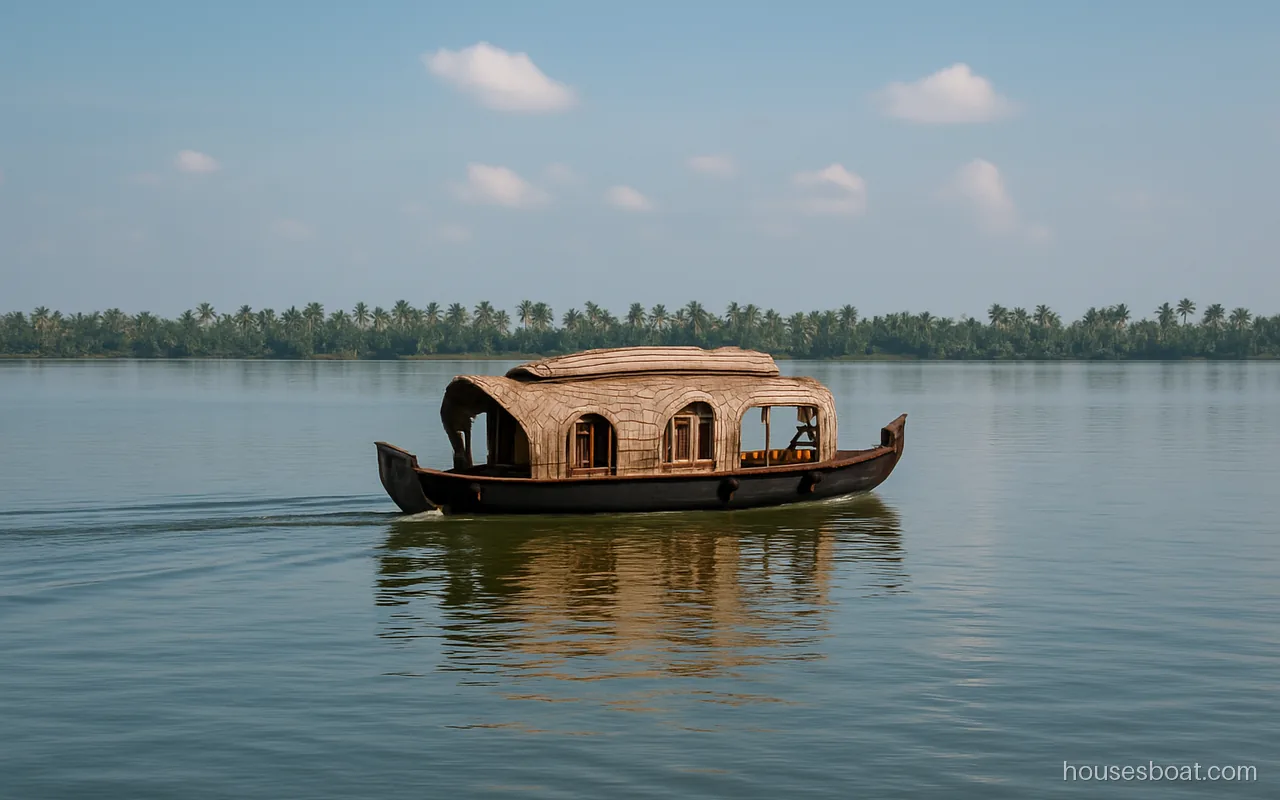
A Kerala houseboat is an old style rice barge rebuilt with bedrooms, a kitchen and its own crew, cruising the backwaters by day and mooring at night, and most trips start from Alleppey, Kumarakom or Kollam. Smaller fleets run near Kochi and in the quiet north around Nileshwar.
This hub compares those bases, explains what the stay includes and what it does not, and points you to the detailed page for each question, from food to bedrooms to sunset.
Quick facts
Main bases
Alleppey (Alappuzha), Kumarakom, Kollam; smaller fleets near Kochi and Nileshwar.Usual stay
One night: board around midday, moor before dark, leave around 9 am.Included
Crew, cruise, lunch, tea, dinner and breakfast on most overnight packages.AC
Often only at night on standard boats; full day cooling costs more.Best months
October to February for dry days; June to September for monsoon green.Must check
Port Department licence and tourism classification.
Kerala houseboat bases compared
Every base sits on the same network of lakes, rivers and canals, yet the feel changes a lot from one to the next. Use this to narrow down where to board.
| Base | Water you cruise | Character | Our guide |
|---|---|---|---|
| Alleppey (Alappuzha) | Punnamada lake, Vembanad, Kainakary and Kuttanad canals | Largest fleet, most choice, busy on weekends | Alleppey houseboats |
| Kumarakom | East side of Vembanad lake | Open water, calmer jetties, lake sunsets | Kumarakom |
| Kollam | Ashtamudi lake and the canal north | Fewer boats, long one way routes | Kollam and Ashtamudi |
| Kochi | Kadamakudy islands and nearby channels | Short cruises close to the city | Kochi |
| Nileshwar | Valiyaparamba backwaters | Very quiet, few boats, north Kerala food | Nileshwar and Bekal |
People also ask about Kozhikode. There are short boat trips on the Kallai river, Elathur side and canals around the city, but the overnight scene is tiny compared with the south, so treat it as an outing rather than a stay.
What a houseboat stay in Kerala includes
On a standard overnight package you get the boat, a crew of usually two or three (someone to steer, a cook and a deckhand), the cruise, and four meals: lunch, evening tea with a snack, dinner and breakfast. Bedding, towels and drinking water are normally provided. What is often extra: full day AC, seafood such as prawns or crab, soft drinks, pick up from the station and any extra cruising hours.
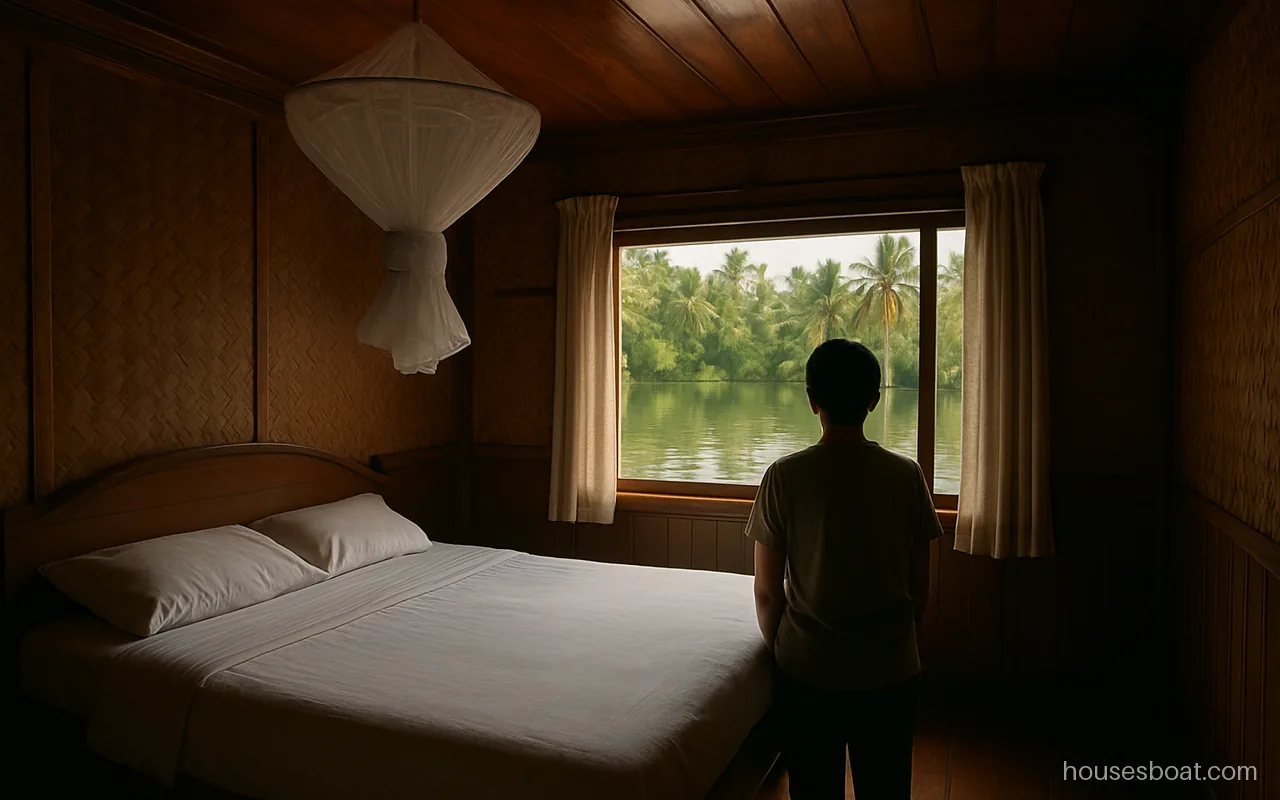
Rooms are compact but complete, with attached bathrooms; see inside a Kerala houseboat for room by room detail. Meals are home style Kerala cooking with fish, vegetables and red or white rice, and our page on food on board shows a typical menu and how to ask for vegetarian cooking.
From kettuvallam to floating cottage
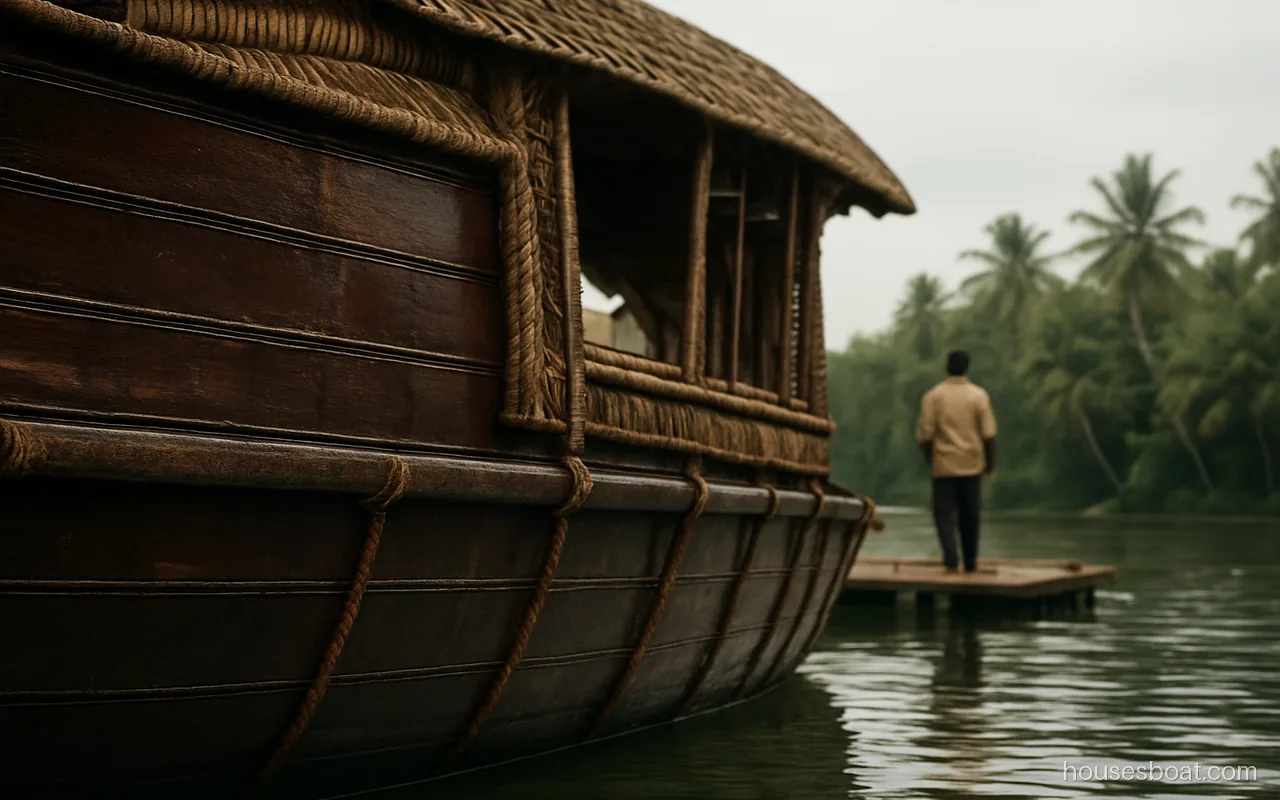
The boats began as kettuvallams, barges that carried rice and goods across the backwaters in the days of the rice trade. Their hulls were anjili wood planks stitched together with coir rope rather than nailed, and sealed with cashew nut shell oil. When roads and lorries took over the cargo, owners added bedrooms and a kitchen, and the houseboat was born. The kettuvallam page covers that story and how to spot a boat that still keeps the old craft.
How long to stay: hours, a day or nights
| Length | Rough shape | Good for |
|---|---|---|
| Two to five hours | A short loop, tea only or no meals | Tight schedules, a first taste |
| Day cruise | Boards before noon, back before dusk, lunch served | Families who prefer a hotel bed |
| One night | Midday boarding, moored by evening, short morning cruise | Most travellers |
| Two nights | Longer routes, sometimes Alleppey to Kumarakom or Kollam | Slow travellers, honeymooners |
Details live on the hourly cruise, day cruise and overnight stay pages. One rule shapes every overnight trip: boats stop cruising and tie up for the night in the late afternoon, usually around 5:30 pm under a local rule. Ask your operator for the exact time on your dates.
Registration and the official classification
Every houseboat carrying guests needs a licence from the Kerala Port Department, and its crew need their own licences. On top of that, the state tourism department runs a voluntary classification. The current tiers are Silver Vessel, Gold Vessel and Diamond Vessel, from basic to best equipped, and they replace the older Gold Star, Silver Star and Green Palm labels you may still see on some sites.
Best Kerala houseboat for your kind of group
- Couples: a one bedroom private boat with a front lounge; read couples and honeymoon.
- Families: two or three bedrooms, full railings, a cook who can make milder food; see families.
- Friends' groups: larger boats with an upper deck, or two smaller boats travelling together.
- Solo or tight budget: a cabin on a sharing houseboat, accepting set meal times and strangers on deck.
- Want privacy above all: a private houseboat so the whole deck is yours.
Seasons on the backwaters
From October to February the air is drier, evenings are pleasant and boats are busiest, especially around Christmas, New Year and long weekends. March to May brings heavy, humid afternoons; AC hours matter more then. The monsoon, roughly June to September, is wet but beautiful, with swollen canals, very green paddy and often the lowest rates; our rain and monsoon guide covers what changes.
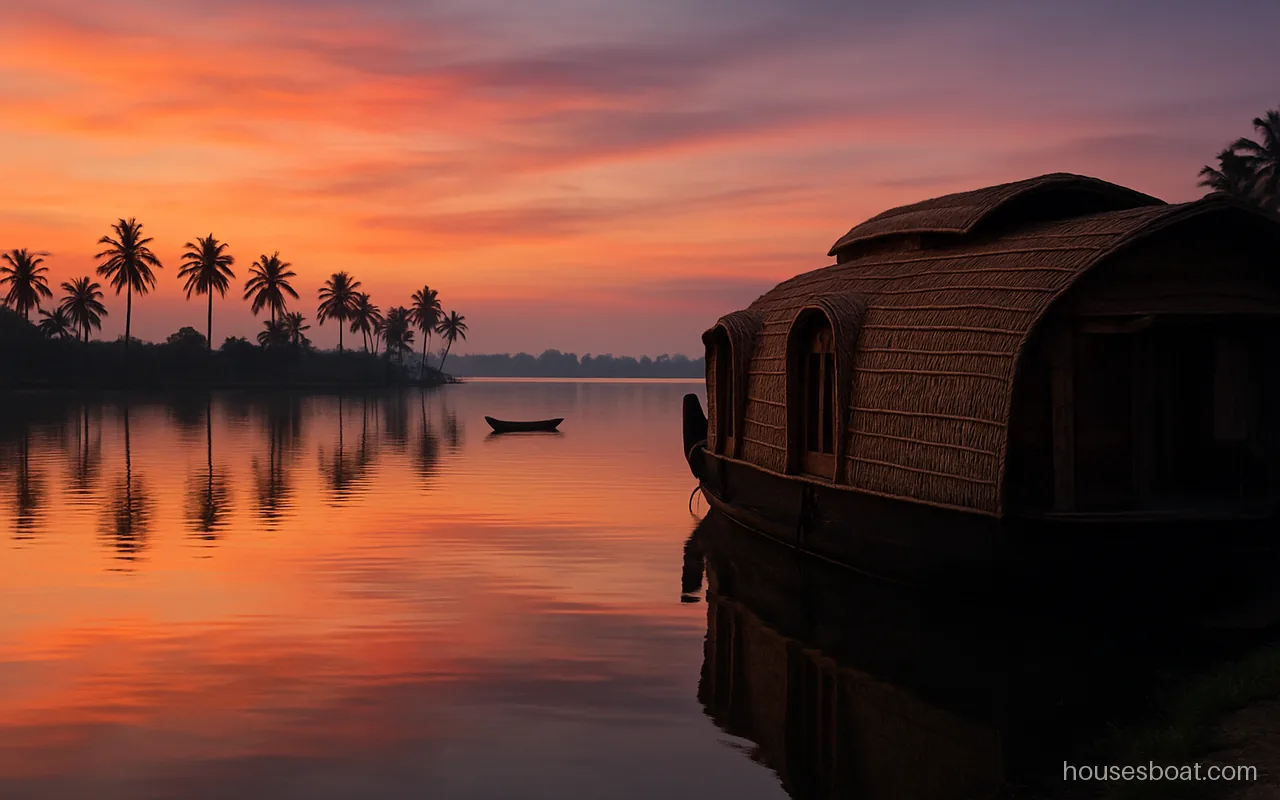
Evening light is a highlight in every season. Because boats are moored by sunset, where you tie up matters; the sunset guide explains how to ask for a west facing spot.
Hill stations and other places people ask about
Munnar and Thekkady are in the Western Ghats, far from the backwaters, and neither has houseboats. The usual plan is to spend nights in the hills and then drive down to Alleppey or Kumarakom; our Munnar and Thekkady page gives the honest options and drive times. If you are combining Kerala with Kashmir, the Srinagar guide explains how different a moored lake houseboat feels.
Safety and simple manners on board
Backwater boats are slow and stable, but a few habits keep everyone safe and the crew happy.
- Find the life jackets when you board and keep one handy for each child.
- Never swim from the boat; weeds, currents and passing traffic are real hazards.
- Keep shoes off inside, as the crew do, and keep plastic out of the water.
- Tell the cook about allergies or spice levels at lunch, not at dinner.
- Settle any extra hours or seafood charges in writing before they happen.
Questions travellers ask
Where should a first timer book a houseboat in Kerala?
Pick a registered private boat in Alleppey or Kumarakom for one night, with the number of bedrooms matching your group. Alleppey gives more canal scenery and choice, while Kumarakom trades some canals for broad lake views and calmer jetties. Ask for a route that includes both open water and village canals.
Is a Kerala houseboat stay worth it for one night?
Yes for most people. One night gives you the full afternoon cruise, the evening on the water and a short morning cruise. A second night repeats a lot of the same scenery unless you book a longer one way route.
Can a Kerala backwater houseboat cruise at night?
No. Boats tie up in the late afternoon, usually around 5:30 pm, and only move again after daybreak. It is a local rule, so confirm the exact cut off with your operator.
Is there a houseboat in Kozhikode?
There are short boat trips on the Kallai river and canals around Elathur, but very few overnight houseboats. For a proper night on board in north Kerala, Nileshwar and the Valiyaparamba backwaters are a better bet.
Do Kerala houseboats have AC all day?
On a standard boat the cooling usually comes on after dinner and goes off around dawn, since the generator powers it. Premium and luxury boats more often offer full day cooling. Always ask which hours are included.
Which months are best for houseboats in Kerala?
October to February is the most comfortable and busiest stretch. June to September is rainy but green and often cheaper, while March to May is hot in the afternoons.