
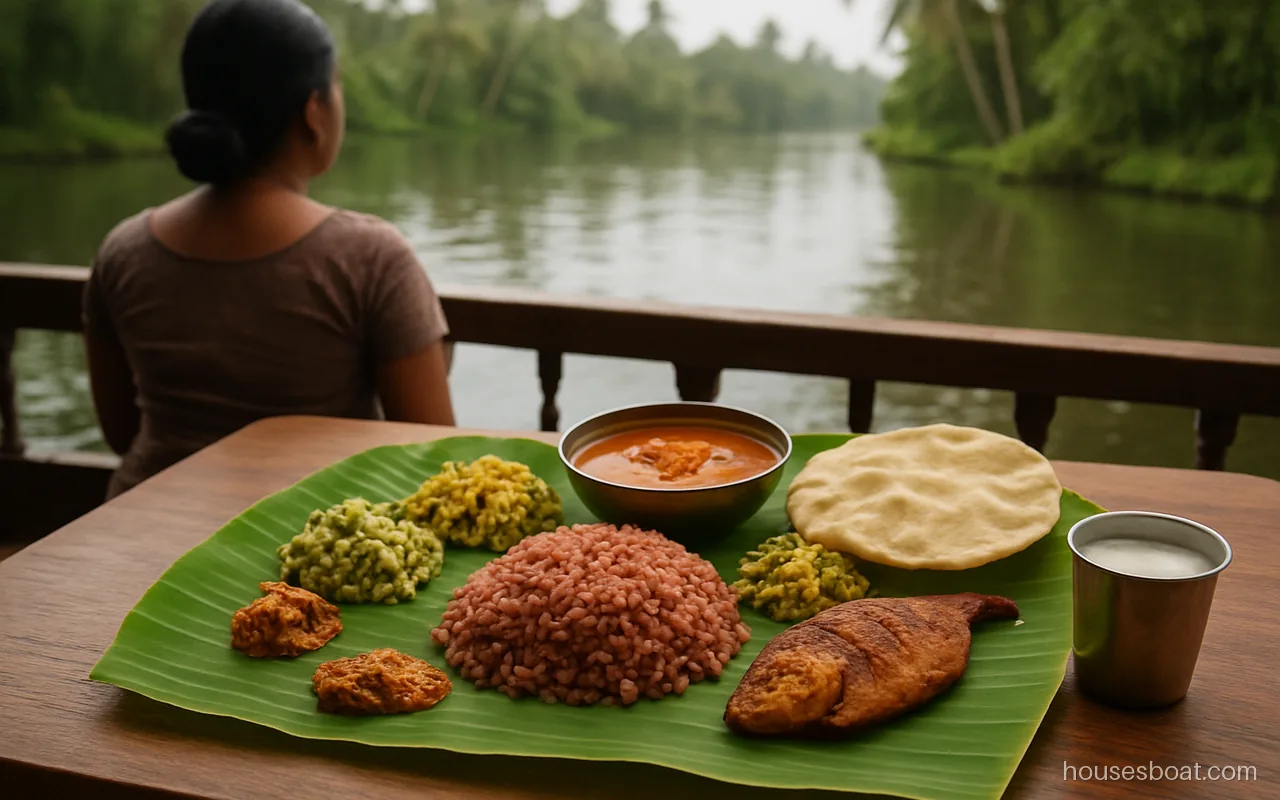
A typical Alleppey houseboat food menu is home style Kerala cooking served four times a day: lunch soon after boarding, tea and a fried snack in the afternoon, dinner after the boat moors, and breakfast before the morning cruise. The cook prepares everything fresh in the small kitchen at the back, and most crews happily adjust spice levels or switch to a fully vegetarian menu if you tell them early.
Quick facts
Meals included
Lunch, evening tea and snack, dinner, breakfast on most overnight stays.Style
Kerala home cooking with rice, fish, vegetables and coconut.Veg and Jain
Possible on request; tell the operator when booking.Usually extra
Prawns, crab, lobster, soft drinks, special cakes.Drinking water
Bottled or filtered, normally provided.
Fresh fish and seafood
The backwater speciality is karimeen, the pearl spot fish, fried with spices or cooked as pollichathu wrapped in a banana leaf. Many boats include one fish dish with lunch. Prawns, crab and the big freshwater lobster are nearly always extra, and some crews stop at a fish farm or a fisherman's canoe on the way so you can choose your own.
Pure veg houseboat in Alleppey and Jain meals
Kerala cooking has plenty of vegetarian dishes, so a fully vegetarian boat is easy to arrange. Ask the operator for a pure veg houseboat in Alleppey when you book, and if it matters to you, request that no fish or meat is cooked on board during your stay. Jain meals without onion, garlic or root vegetables are possible on many boats, but the cook needs notice to buy the right ingredients.
- Mention it at booking, not on arrival.
- Ask whether separate utensils can be used.
- Carry a few packed snacks in case of gaps.
Kerala houseboat dining with children and older relatives
Spice levels can be high by default, especially in fish curries. Ask the cook to make one curry mild and to keep plain rice, curd and fruit ready. For older relatives with diabetes or low salt needs, give a written note at lunch on the first day; crews are used to it. More family advice is in our families guide.
Houseboat dinner in Kerala: the evening on deck
Dinner comes after the boat has moored, usually around 8 pm. Lights attract insects at dusk, so many crews serve inside the lounge with screens down. A cake or a decorated table for a birthday or anniversary can usually be arranged for an extra charge if you ask in advance.
Cooking happens just behind the bedrooms; our interior guide shows how the boat is laid out.
Drinks, water and hygiene
Drinking water is normally provided in bottles or from a filter. Soft drinks and packaged juices are often extra. Alcohol rules change, and many operators do not allow it on board or ask that it be kept discreet; check before you pack any. For hygiene, it is fair to look at the kitchen before the boat leaves and to ask whether vegetables are washed in drinking water.
What to tell the cook, and when
- At booking: veg, Jain, allergies, seafood wishes.
- On boarding: spice level and timing for lunch.
- Before tea: what you would like for dinner if the menu has choices.
- Before bed: breakfast time and what you want.
To see where meals fall in the day, read the overnight stay guide, and for everything else on board see the Alleppey houseboat guide.
Questions travellers ask
What food is served on a Kerala houseboat?
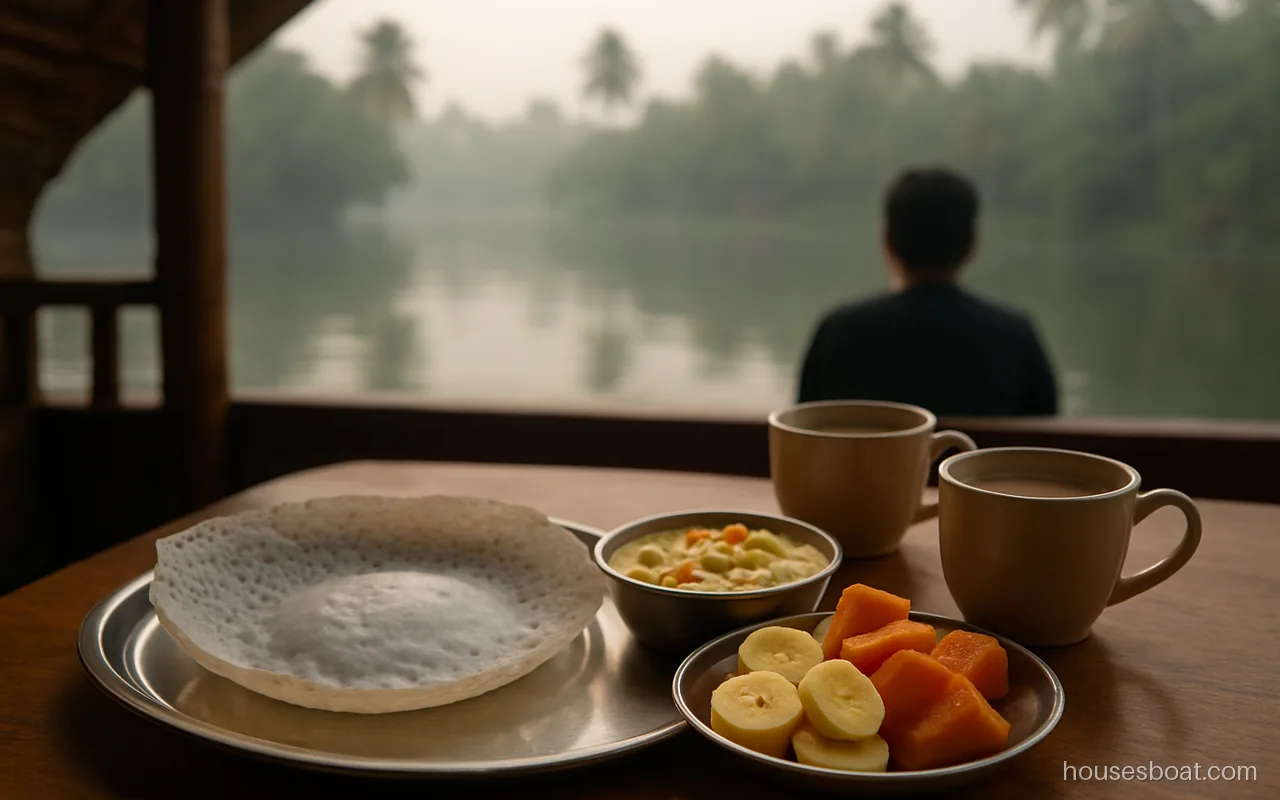
Home style Kerala meals: rice with sambar, vegetable dishes, fish fry and pappadam at lunch, a fried snack with tea, a curry dinner and appam or puttu at breakfast.
Can I get a pure veg houseboat in Alleppey?
Yes. Ask at booking and the operator can arrange a fully vegetarian menu, and often a boat that cooks no meat or fish during your stay.
Is seafood included in the Alappuzha houseboat food?
One fish dish, often karimeen, is commonly included. Prawns, crab and lobster are usually charged extra.
What time is dinner on a houseboat in Kerala?
Usually around 8 pm, after the boat has moored for the night. You can ask the crew to serve earlier for children.
Can the houseboat cook make food less spicy?
Yes. Tell the cook at lunch on the first day, and ask for one mild curry and plain curd for children or older relatives.